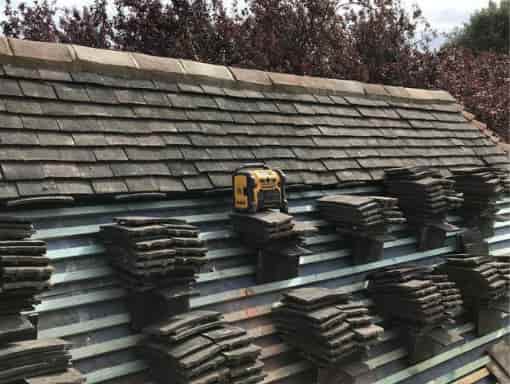
Slate roofs are valued for their durability and distinctive appearance, but even a well-performing slate roof can eventually develop localised defects. Individual slates can crack, loosen or move out of position, while the components that secure and weatherproof the roof can deteriorate over time. Recognising these changes early can make it easier to address a developing problem before it affects a wider section of the roof.
For property owners in Folkestone, Kent, the important point is not to assume that every visible defect means an ageing slate roof needs replacing. Many problems can remain relatively localised when identified promptly. A professional roof assessment can establish whether individual slates require attention or whether the visible warning signs indicate deterioration elsewhere within the roofing system.
How Can You Tell When a Slate Roof Is Starting to Need Repair?
Early slate roof problems often appear as relatively small changes: one slate sitting differently from its neighbours, fragments appearing below the roof, an isolated damp patch or a section that looks uneven.
These signs should be considered in context. The condition of surrounding slates, fixings, flashing, ridges, valleys and other roof details can help determine whether the problem is confined to one area or forms part of a broader pattern.
A Slipped Slate Is One of the Clearest Warning Signs
Slate roofs depend on individual slates remaining correctly positioned so that rainfall is directed down the roof and away from the structure beneath.
When a slate slips, the normal overlapping arrangement can be disrupted.
The movement may initially appear minor, particularly if the slate has only dropped slightly. However, the exposed area beneath it can become more vulnerable to water ingress.
A slipped slate should therefore be investigated rather than waiting for an internal leak to confirm that there is a problem.
Missing Slates Leave the Roof More Exposed
A completely missing slate is usually easier to recognise than one that has moved only slightly.
The resulting gap can expose the materials beneath and reduce the effectiveness of the surrounding roof covering.
Replacing the missing slate may be straightforward where the rest of the area remains sound.
However, it is also useful to establish why the slate was lost. If neighbouring slates or their fixings are also deteriorating, attention may need to extend beyond the most obvious gap.
Cracked Slates Can Be Easy to Overlook
A slate does not need to fall from the roof before it becomes defective.
Cracks can develop while the slate remains broadly in its original position. Depending on the location and extent of the crack, water may eventually find a route through the affected section.
From ground level, smaller cracks can be difficult to identify.
This is one reason an apparently complete roof can still contain individual slates requiring professional attention.
Broken Corners Can Affect the Slate Covering
Damage is not always concentrated through the centre of a slate.
Corners and edges can break away, altering the overlap between neighbouring pieces. Small fragments may fall without immediately creating an obvious gap when the roof is viewed from below.
Where broken edges are visible, the surrounding area should be assessed.
The significance depends on how much material has been lost and whether the remaining slate continues to provide appropriate coverage.
Slate Fragments Around the Property Can Provide an Early Clue
Pieces of slate found below the roof should not automatically be dismissed.
They may have come from a cracked or deteriorating slate that remains partly in position. In other cases, a larger section may already have become displaced.
The location of the fragments can sometimes provide a useful indication of where inspection should begin.
However, the source should still be confirmed rather than assuming that the slate directly above the fragment is necessarily the only affected component.
A Slate Sitting Lower Than Its Neighbours Deserves Attention
One of the subtler warning signs is a slate that no longer lines up correctly with surrounding pieces.
It may have moved only a small distance and still appear to be covering most of the underlying area.
This change can indicate that the slate or its fixing is no longer performing as intended.
Early attention can be useful because the slate may continue moving until the affected area becomes more exposed.
Uneven Slate Courses Can Indicate Movement
Slate roofs normally have a recognisable pattern.
When individual slates begin slipping or moving, the previously consistent lines can start appearing uneven. One isolated irregularity may indicate a local problem, while several changes within the same area can suggest more widespread movement.
Viewing the roof from a suitable ground-level position can sometimes reveal these differences.
Professional assessment can then establish whether the problem involves individual slates or the way a larger section is secured.
Loose Slates May Move During Windy Conditions
A slate that has become insecure may not immediately fall.
Movement can sometimes become noticeable during windy conditions, particularly where a slate is no longer firmly held in its intended position.
Repeated movement deserves attention because it can affect both the loose slate and neighbouring materials.
A professional inspection can determine which components require securing or replacement before further movement develops.
Repeatedly Slipping Slates Can Indicate a Broader Issue
One slipped slate does not automatically suggest widespread roof deterioration.
Several slipping slates appearing over time deserve more careful investigation.
If repairs are repeatedly required within the same section, the problem may involve more than isolated slate damage. Fixings or other supporting components may also have deteriorated.
Understanding this distinction helps avoid repeatedly addressing individual symptoms without considering why they continue to occur.
Fixing Deterioration May Not Be Visible From the Ground
The slates themselves are only one part of the roofing system.
Each slate needs to remain appropriately secured. As components age, deterioration can affect how reliably individual slates remain in place.
This type of problem may initially become apparent through movement rather than visible damage to the slate itself.
Where several otherwise sound-looking slates begin slipping, their fixings and the surrounding roof area should be considered as part of the assessment.
Damp Patches Can Be an Early Internal Warning
Not every slate roof problem is first noticed outside.
A damp patch on a ceiling or within the roof space can indicate that water is finding a route through the roofing system.
The visible dampness should not be assumed to sit directly beneath the external defect.
Water can travel after entering the roof, so professional investigation may be necessary to identify the actual source.
Small Water Marks Should Not Be Dismissed
A minor stain can seem relatively insignificant, particularly if no active dripping is visible.
However, an intermittent water mark can indicate that ingress occurs only during particular weather conditions.
The fact that the area dries between periods of rainfall does not necessarily mean that the roof defect has resolved itself.
Early investigation can help locate the weakness before repeated water ingress affects a larger internal area.
Roof Space Moisture Can Reveal Problems Before Ceilings Are Affected
Where accessible, the roof space can sometimes provide useful evidence of developing water ingress.
Moisture marks, staining or dampness beneath a particular roof section may appear before water reaches the finished ceiling below.
This information can help narrow down the area requiring external inspection.
However, because water can travel along roofing components, the highest or earliest visible moisture point is often more useful than simply looking directly above the final stain.
Daylight Through the Roof Can Indicate a Defect
Visible daylight within a roof space can sometimes indicate a gap within the roof covering.
This may relate to a missing or displaced slate, although the exact cause should be confirmed before repair work is planned.
Not every roof defect will produce visible daylight, so its absence should not be taken as proof that the roof is completely sound.
It is simply one possible warning sign among several.
Flashing Should Be Considered Alongside the Slates
When a slate roof begins leaking, the slates themselves are not always responsible.
Flashing helps protect vulnerable roof junctions. Movement or deterioration in these areas can allow water to enter even when surrounding slates appear intact.
This is particularly important when investigating recurring leaks.
Replacing nearby slates without checking the relevant roof junction may fail to address the actual entry point.
Roof Valleys Can Develop Localised Problems
Valleys carry water from adjoining roof slopes and therefore need to remain in suitable condition.
Problems around the valley can involve surrounding slates, accumulated debris or deterioration within the valley itself.
Early signs may include localised dampness or visible changes around adjacent slates.
Because water is naturally concentrated through these sections during rainfall, deterioration deserves proper investigation rather than treating the nearest visible slate as the assumed cause.
Ridge Areas Can Also Require Attention
The highest part of a roof should be included when looking for signs of deterioration.
Movement or defects around the ridge can create vulnerabilities that are not immediately obvious from inside the property.
Water entering relatively high on the roof can also travel before appearing elsewhere.
A complete roof assessment should therefore consider ridge areas alongside the slate covering rather than examining individual slates in isolation.
Problems Around Roof Junctions Can Be Misleading
Where different roof sections or materials meet, the details need to work together to manage rainfall effectively.
A damp patch near one of these areas may initially appear to indicate a defective slate.
However, the actual problem could involve the junction itself.
Professional diagnosis helps identify which component has failed so that repairs can be directed towards the underlying cause.
Previous Repair Areas Should Be Monitored
A previously repaired section does not necessarily indicate an ongoing problem, particularly where the work remains sound.
However, if new defects repeatedly develop close to the same location, the wider area deserves assessment.
The original problem may have been localised, or neighbouring materials may subsequently have deteriorated.
Looking at the repair history can therefore provide useful context when investigating new slate movement or water ingress.
Several Small Defects Can Be More Significant Than One Obvious Problem
One dramatic-looking broken slate can attract attention, but several smaller defects spread across the roof may provide more useful information about its overall condition.
Multiple slipped slates, cracked edges and areas of irregular alignment can indicate that deterioration is no longer confined to one component.
The pattern of defects matters.
Professional assessment can determine whether individual repairs remain appropriate or whether a connected section requires broader attention.
Moss Should Not Automatically Be Confused With Slate Failure
Changes in the appearance of a slate roof do not necessarily indicate structural failure.
Surface growth can alter how the roof looks without automatically meaning that the slates underneath require replacement.
The important issue is the physical condition of the roof covering.
Slipping, cracking, breakage and water ingress provide more direct evidence of a repair requirement than appearance alone.
An Older Slate Roof Does Not Automatically Need Replacing
Age by itself should not determine whether a slate roof requires complete replacement.
A roof can contain many serviceable slates while developing individual defects that can be repaired locally.
The condition and pattern of deterioration provide more useful information.
Where problems are confined to specific areas, professional repairs may preserve substantial sections of the existing roof.
When Localised Slate Roof Repair May Be Appropriate
Targeted repair can often be suitable where:
- one or a small number of slates have slipped;
- individual slates are cracked or broken;
- a limited number of slates are missing;
- surrounding roof areas remain in satisfactory condition;
- the cause of a leak can be traced to a specific defect;
- localised flashing or junction work requires attention;
- previous repairs remain stable.
The objective is to correct the affected area while retaining sound roofing materials wherever practical.
When Several Warning Signs Appear Together
A broader assessment becomes increasingly important when multiple symptoms develop.
For example, several slipping slates combined with recurring dampness and irregular roof lines can provide a different picture from one isolated broken slate.
Likewise, repeated repairs within the same section can suggest that connected components need closer investigation.
No individual symptom automatically determines the scope of work.
Considering the warning signs together provides a more reliable understanding of the roof’s condition.
Early Repairs Can Help Prevent Wider Deterioration
A small roofing defect can leave surrounding materials more exposed.
If a slipped slate creates an opening, repeated rainfall can affect the area beneath. Continued movement can also influence neighbouring slates.
Addressing the problem while it remains localised can help protect surrounding roofing components.
This is one of the main reasons early warning signs should be investigated rather than waiting until water ingress becomes substantial.
Why Professional Slate Roof Assessment Matters
Slate roofing problems are not always straightforward to diagnose from ground level.
The visible defect may be only part of the issue, while the actual source of water ingress can be positioned elsewhere. Professional assessment considers individual slates alongside fixings, flashing, valleys, ridges and other relevant roof details.
This helps establish whether a focused repair is appropriate or whether deterioration extends further.
The aim should be to carry out the work the roof genuinely requires rather than assuming that every defect means extensive replacement.
Slate Roof Repairs in Folkestone, Kent
At Folkestone Roofing Services, we understand the importance of identifying slate roof problems before they develop into more disruptive defects.
Slipped, cracked or missing slates may require relatively localised attention when surrounding roofing remains sound. Where several warning signs are appearing together, a more detailed assessment can establish whether other components are contributing to the problem.
For property owners in Folkestone, Kent, professional slate roof repairs can address developing defects while preserving sound sections of the existing roof wherever appropriate.
Conclusion
The early warning signs that a slate roof needs repair can be relatively subtle. A slightly slipped slate, small fragments on the ground, an isolated crack, uneven slate courses or a minor internal damp patch can all indicate that part of the roof requires attention.
The most important consideration is whether the problem is isolated or part of a developing pattern. One damaged slate may require a straightforward localised repair, while repeated slipping, several damaged slates or recurring water ingress can indicate that a wider section needs assessment.
Recognising these warning signs early allows the underlying cause to be identified before deterioration has more opportunity to spread.
If you have noticed slipped, cracked or missing slates, recurring dampness or another change to the roof of your property in Folkestone, Kent, contact Folkestone Roofing Services. We can assess the affected area and recommend an appropriate slate roof repair based on the actual condition of the roof.
Call us on: 01303 761494
Click here to find out more about Folkestone Roofing Services
Click here to complete our contact form and see how we can help with your roofing needs.